
Ceilings Show Everything. We Make Them Disappear.
Ceilings catch light from every window, which means they show every flaw: water stains from an old leak, cracks along seams, sags where tape let go. You stop seeing your ceiling only when it is perfect, and that is how we leave it.
We start by making sure the cause is handled, because painting over an active leak helps nobody. Then we repair the damage, block stains with the right primer, and repaint so the fix blends into the whole ceiling. No halos, no patches that show at night.
Every ceiling project is backed by our workmanship guarantee and covered by full general liability and workers compensation insurance. We will not leave your project until you are satisfied.
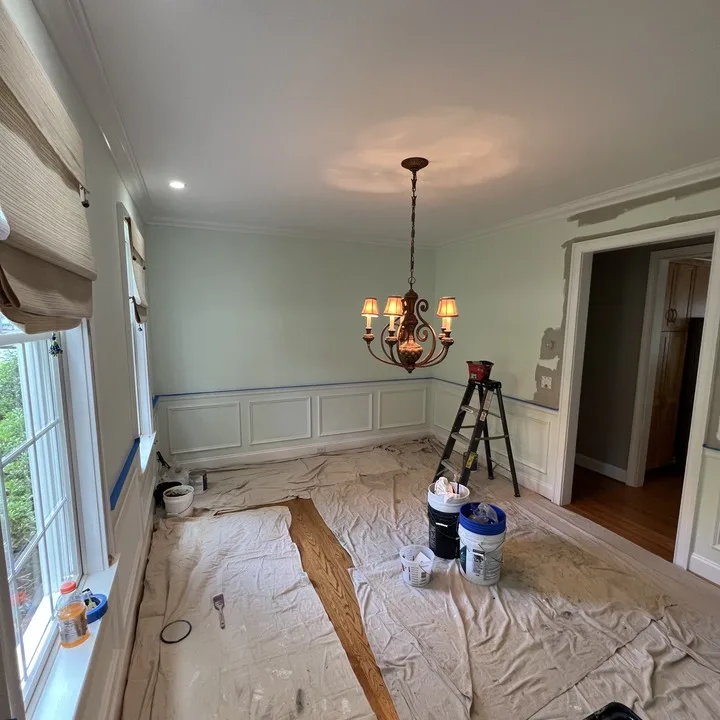
Ceiling repair and painting in CT starts with finding the water
A ceiling almost never needs cosmetic help for cosmetic reasons. Ceiling repair and painting in CT nearly always begins with a stain, and a stain means water arrived from somewhere. The first job is finding where.
Water damaged ceilings
To fix a water damaged ceiling in Central Connecticut properly, the leak has to be dead first. A roof, a failed flashing, an ice dam from last winter, a supply line, a shower pan, or a bathroom fan venting into an unconditioned attic instead of outside. We will tell you what we think it is, and if it needs a roofer or a plumber first we say so rather than painting over it and letting you find out in March.
Once it is dry, damaged material comes out, the area is rebuilt, and the whole thing gets a stain blocking primer. This part is not optional. Water stains are tannins, and they bleed straight back through ordinary latex primer and topcoat, sometimes weeks later. That returning brown halo is the single most common ceiling repair failure we get called about.
Popcorn ceilings
Popcorn ceiling removal and repair in CT is a big, messy improvement that transforms a room. One warning worth taking seriously: textured ceiling material applied before the early 1980s can contain asbestos, and there is no way to tell by looking. It should be tested before anyone scrapes it. That is inexpensive, and we would rather you spend a little on a test than have a crew aerosolize a hazard through your house. If a test comes back positive, it is abatement work, not painting work, and we will tell you that plainly.
Cracks, sags, and finishing
Sagging usually means fasteners have let go or plaster has lost its grip. That gets re-anchored or rebuilt rather than filled. Everything then gets finished to match the rest of the room, which for a ceiling means a flat sheen so the light does not rake across it and highlight every seam. Related work is on the drywall and plaster repair page.