Wallpaper Done by People Who Hang It Right
Wallpaper is back, and done well it turns a powder room, bedroom wall, or dining room into the best part of the house. Done badly, every seam and bubble shows forever. Hanging paper right is a craft, and it is one we take seriously.
We prep walls smooth, size them properly, match patterns across seams, and roll every edge tight. Bringing in a bold print or a subtle texture, you get the same careful result. We remove old wallpaper too, without wrecking the wall behind it.
Every wallpaper project is backed by our workmanship guarantee and covered by full general liability and workers compensation insurance. We will not leave your project until you are satisfied.
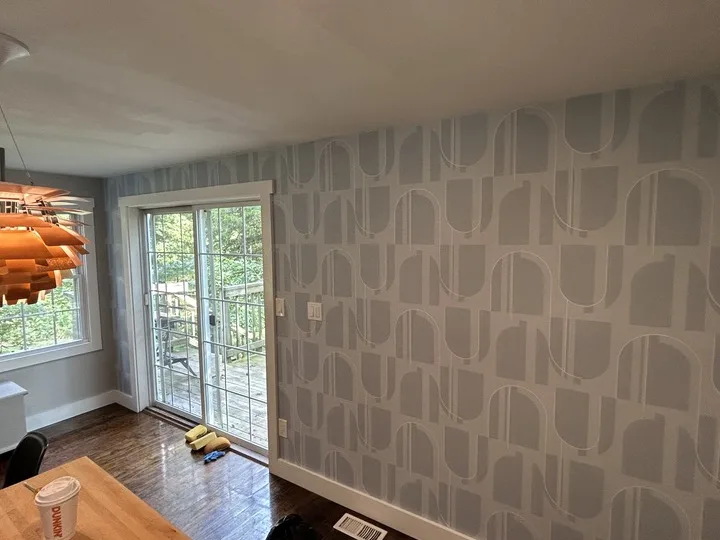
Wallpaper installation in Central CT, and getting the old paper off first
Wallpaper is back, and so are the walls of people who tried to hang it themselves. Professional wallpaper hangers in CT spend as much time on what is under the paper as on the paper itself, because paper is unforgiving: it telegraphs every ridge, every unsanded patch, and every soft spot in the wall behind it.
Removal is its own job
Wallpaper removal in Connecticut ranges from easy to genuinely miserable depending on what is behind it. Paper hung on primed and sized walls usually comes off cleanly. Paper hung directly on unprimed drywall takes the paper facing with it, which means skim coating the whole wall afterward. Multiple layers, common in older homes around Bristol and the Valley, get worse with each one. We score, steam, and strip rather than tearing, then wash the adhesive residue off, because new paper will not stick to old paste and paint over old paste bubbles.
Wall preparation before anything is hung
Walls get patched, sanded flat, primed, and sized. Sizing gives the adhesive something consistent to grab and makes the paper removable later without destroying the wall for the next owner. Skipping it is how a wall ends up needing full skim coating in ten years.
Pattern, seams, and murals
Pattern match is the part people notice without knowing why. Repeats have to be planned across the whole wall before the first strip goes up, and the starting point is chosen so the least attractive seam lands somewhere nobody looks. Seams are butted, not overlapped. Large format murals are a different discipline again, since panels have to be sequenced and hung in order with no room to correct drift once you are three panels in.
Accent walls, powder rooms, dining rooms, stair halls, and commercial murals are all in scope. If you are papering one wall and painting the rest, the interior painting is scheduled around it so the colors get chosen together.